

Which Truck Rides Smoother for Daily Drives around Minden, LA — 2026 Toyota Tacoma or 2026 Chevrolet Colorado?
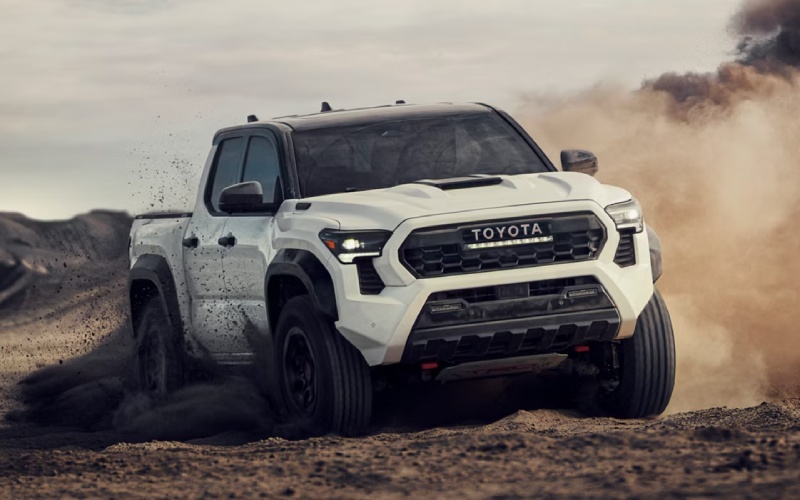
Yokem Toyota – Which Truck Rides Smoother for Daily Drives around Minden, LA — 2026 Toyota Tacoma or 2026 Chevrolet Colorado?
What most drivers mean by a “smooth ride”
When shoppers around Minden, LA ask which midsize truck rides smoother, they usually mean a few specific things: less head toss over patched pavement, controlled body motion on rolling roads, calm cabin noise at highway speed, and suspension composure when the bed is empty. These are the touchpoints we use to compare the 2026 Toyota Tacoma and the 2026 Chevrolet Colorado.
Both trucks have modern frames and strong turbocharged power. Where they differ is in suspension architecture and the way their drivetrains deliver torque. Those differences show up everywhere from I-20 to small-town streets and the two-lane stretches that connect weekend destinations.
Suspension design and why it matters daily
Tacoma’s Double Cab models use a multi-link rear suspension with coil springs. In simple terms, coil springs and multi-link geometry let engineers fine-tune how the rear axle moves, improving small-bump compliance and reducing the fore-aft bobbing you feel on repetitive surface imperfections. Across a weekday route with patched asphalt, driveway cutouts, and expansion joints, that pays off in a calmer ride.
Colorado’s lineup continues to rely on a traditional rear-leaf setup. Leaf springs are tough and proven, and Colorado tunes them well. Still, on lightly loaded or empty-bed drives, leafs can transmit more vertical motion into the cab. On ZR2, the Multimatic® DSSV dampers significantly improve control at higher speeds over rough terrain; for daily commuting, they’re excellent shocks, but they do not change the basic leaf-spring character felt on smaller bumps.
Power delivery, shifting, and cabin calm
Ride comfort is also about what you hear and feel from the powertrain. Tacoma offers the i-FORCE 2.4L turbo with an 8-speed automatic or a 6-speed manual on select grades, plus the available i-FORCE MAX hybrid that combines turbocharged power with an electric motor for strong, low-rpm torque. Hybrid trucks tend to feel composed at city speeds because electric assistance smooths initial throttle response and shortens the time spent in busy lower gears. That sensation pairs nicely with Tacoma’s suspension tuning.
Colorado’s 2.7L TurboMax is a standout for torque and is paired exclusively with an 8-speed automatic. It’s strong and refined at highway speeds. At low speeds, the single powertrain choice limits personalization, and some drivers notice more pronounced shifts when the truck is lightly loaded. It’s not a dealbreaker — just a difference you’ll feel back-to-back.
Seats, screens, and the perception of smoothness
How the cabin supports you matters. Tacoma’s available IsoDynamic Performance front seats are designed to help manage body movement during bumpy stretches. Even without those seats, Toyota’s seating geometry and supportive cushions reduce fatigue on longer drives. Add the available 14-in. Audio Multimedia Display and 12.3-in. Digital Gauge Cluster, and you’re scanning less and focusing more on the road, which subtly improves the drive experience.
Colorado’s cabin is cleanly designed with an 11.3-in. center screen and Google built-in, plus an 11-in. Driver Information Center. It’s an inviting space with modern tech. For drivers who prioritize the largest screens and the least eye movement between gauges and trail views, Tacoma’s setup has the edge.
Off-road hardware and on-road benefits
Even if you rarely leave pavement, trail-bred hardware can benefit daily driving. Tacoma’s available Stabilizer Disconnect Mechanism increases front suspension articulation off-road, but it also signals how much fine-tuning Toyota invested in chassis flex and control. The result is a truck that feels surefooted on uneven surfaces and composed clearing driveways at an angle. Crawl Control (CRAWL) and Multi-Terrain Select won’t be used every day, yet the calibration work behind those features contributes to overall drivability.
Colorado answers with multiple drive modes, and on ZR2, exceptional DSSV damping. If your weekends tilt toward high-speed dirt or desert-style runs, ZR2’s setup shines. For a broader daily mix — city streets, rural lanes, and occasional trailheads — Tacoma’s balance feels notably settled.
Real-world scenarios around Minden, LA
Consider a day that starts on US-371 with stop-and-go traffic, transitions to two-lane sections with rolling pavement, and ends with a short gravel drive to a work site. Tacoma’s coil-spring composure smooths the little stuff, while hybrid torque (if equipped) keeps acceleration clean without buzziness. Colorado stays planted at speed and feels strong merging, but transmits more small-bump motion into the cabin when the bed is empty.
For parking and low-speed maneuvering, Tacoma’s camera suite — including the available 3D Multi-Terrain Monitor — adds helpful context. Colorado’s available underbody cameras are excellent off-road, but the Toyota system’s breadth and interface design are easier to use for quick curb checks and tight spots.
Key takeaways for ride comfort
- Rear suspension design: Tacoma’s multi-link coil-spring setup improves small-bump compliance and reduces head toss versus Colorado’s leaf-spring rear.
- Powertrain feel: Tacoma’s available i-FORCE MAX hybrid smooths low-speed response, while Colorado’s TurboMax is strong but paired only with an automatic.
- Cabin integration: Tacoma’s available 14-in. display and 12.3-in. cluster reduce distraction and help the drive feel calmer.
If a relaxed, composed ride is at the top of your list, Tacoma’s suspension geometry and powertrain options are tailored for the daily mix most midsize truck owners actually drive.
Frequently Asked Questions:
Does the 2026 Toyota Tacoma really ride better on patched pavement than the 2026 Chevrolet Colorado?
Many shoppers find Tacoma’s coil-spring multi-link rear feels calmer over small imperfections, especially with an empty bed. Colorado is very controlled at speed, but its leaf-spring rear can pass more vertical motion into the cabin on broken surfaces.
Will the 2026 Toyota Tacoma’s off-road features help in city driving?
Indirectly, yes. The calibration work behind systems like CRAWL and the Stabilizer Disconnect Mechanism contributes to overall chassis control, which benefits everyday transitions, driveway angles, and curb approaches.
Is the 2026 Chevrolet Colorado quieter inside?
Both trucks are impressively quiet for the class. Perceived calm often comes down to how often the transmission shifts and the frequency of small bumps. Tacoma’s available hybrid can reduce low-speed engine noise and shifts, which enhances the sensation of quietness.
Which truck has the more intuitive screens and controls?
Preferences vary, but Tacoma’s available 14-in. screen and 12.3-in. cluster provide large, legible information with straightforward menus. Colorado’s 11.3-in. display with Google built-in is clean and capable but smaller.
Ready to feel the difference on your daily loop? Stop by for a drive and bring your usual route. You’ll learn more in 10 minutes behind the wheel than from any spec sheet — and our team at Yokem Toyota is here to set up back-to-back comparisons, serving Bossier City, Natchitoches, and Minden with thoughtful, no-pressure guidance.
0 comment(s) so far on Which Truck Rides Smoother for Daily Drives around Minden, LA — 2026 Toyota Tacoma or 2026 Chevrolet Colorado?